Most homes need a 3/4-inch or 1-inch device; commercial and fire lines start around 2 inches. We confirm your district's requirement, install the device to code and file the startup report.
- PriceFree quote
- TimeUsually 1 day
- TestIncluded
- FilingIncluded
Who usually needs a new device
- You're adding a new water service
- You're putting in irrigation
- The building's use is changing
- You got a letter saying a device is required
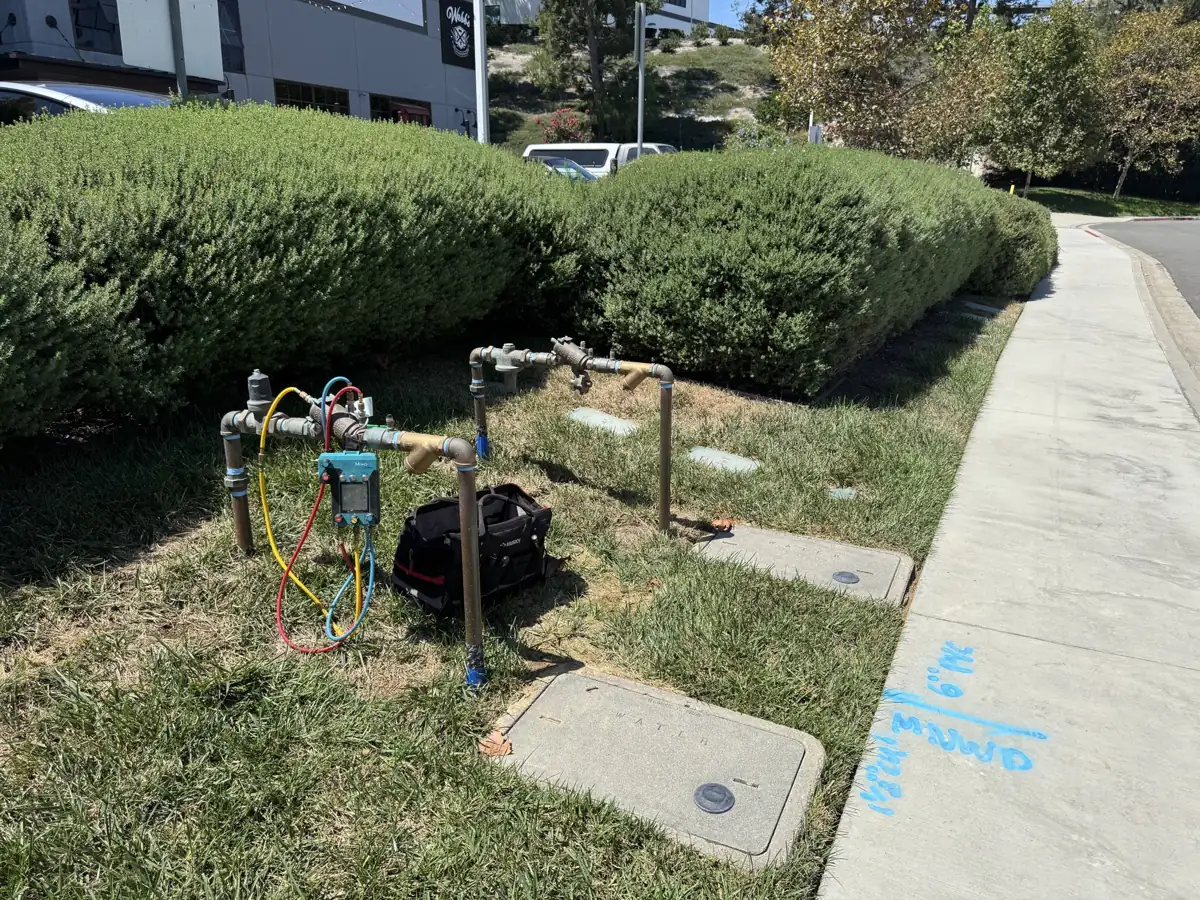
Ways we can help with backflow installation
Backflow Preventer Installation
We figure out which preventer your property needs, RP, double check, PVB or SVB, based on the hazard and your district's rules. Then we size it, install it and certify it with the first test. You get a free quote before any work. Most homes and small businesses are done in a single day. More about backflow preventer installation.
Backflow Assembly Installation
Proper placement on every assembly we install: above grade where required, high enough to work, and with room to test and repair. We add theft or freeze protection when it makes sense, then test the device and file the first report for you. Moving an existing assembly? We do that too, with a retest afterward. More about backflow assembly installation.
How it works
Site visit
We confirm type and size.Approvals
Permits if needed.Install
Usually one day.Test & file
Report sent to your district.
Which device your property needs
Before anything gets installed, we figure out what your water district will accept for your connection. The hazard level decides the device type. High-hazard uses like clinics, car washes and chemical feeds usually need an RP assembly. Lower-hazard lines may use a double check. Irrigation that only faces backsiphonage can often use a PVB or SVB.
Next comes size. The device has to pass the water you use without dropping pressure too much. Most Westminster homes need 3/4-inch or 1-inch devices, while commercial and fire services start around 2 inches.
Getting both right the first time avoids paying for a second install when the district rejects the first.
Installed to be tested every year
A backflow device isn't a one-time install. It'll be tested every year for as long as it's in place, and repaired from time to time. We install with that in mind.
RPs go above ground with room for the relief valve to drain. Vacuum breakers sit higher than every outlet they protect. Every device gets enough clearance for test hoses, shutoff valves and check covers.
Where theft or freezing is a risk, we'll suggest a locking cage or insulated cover. The goal is a device that passes its first test and stays easy to work on for years after.
How an installation goes
First we look at the site, in person or by photo, to confirm what's needed and where it fits. Then you get a free quote covering the device, the work and the first test.
If permits or district approvals are required, we'll say so at the start and plan around them. Most homes and smaller commercial jobs take a single day.
After installation, we flush the line, test the device and send the first report to your district, which sets its annual due date. You get a copy, and we can remind you before the next test.
Installs for homes
Homes usually need a new device for sprinklers, pool fill lines, wells or residential fire sprinklers. Most are 3/4 inch or 1 inch and go in within a day.
We choose a location that follows the placement rules and stays accessible for testing, then test it and send in the first report.
Larger projects
Business and construction projects tend to need plans, permits, bigger devices and coordination with other trades. Fire services commonly use detector assemblies 4 inches and larger.
We fit into your project timeline and file the startup test before final inspection.
Changing how a property uses water
Adding a new boiler, a fertilizer injector, a car wash bay or medical equipment can change the hazard level at a connection. So can converting a space from one kind of business to another. When that happens, the district may require a new or different backflow device.
If you're planning a change like this, call before the work starts. Getting the right device in the plan from the beginning is cheaper than adding it after an inspection flags it.
Not sure whether you need a new device at all? Send us a photo of the area and a short description of the project. We'll tell you whether a backflow device is likely required, what type and roughly what it would take, before you commit to anything. Quotes are free, and most homes and small businesses are done in a single day.
Questions
Which type do I need?
Your water district decides based on how the water is used. We confirm it before we quote.
How often does a backflow preventer need to be tested?
In California, backflow prevention assemblies must be tested at least once a year. They also need a test right after installation, after any repair, and after being moved. Your water district sets the exact due date and usually mails a notice before it.
Where we offer it
We provide backflow installation in Westminster, Midway City, Stanton, Garden Grove, Fountain Valley and Cypress. Typical wait: under a week.
Why Westminster customers call us
Certified testers, calibrated gauges and district filing on every job. You get the price before any work and a copy of every report.
Testing is $105 per device under 4 inches and $175 for 4 inches and up. Other work is quoted free. Phones are answered 7 days a week, 6am to midnight, and emergency calls 24/7. Most visits are booked within the week.
A typical visit in Westminster: a confirmation call the day before, under an hour on site for the test, and the report filed the same day. When a test fails, the fix is usually a rebuild kit, done in one to two hours with the retest included. Bigger jobs like replacements and new installs get a free written quote first. Every report we file is also emailed to you, so your records stay complete.